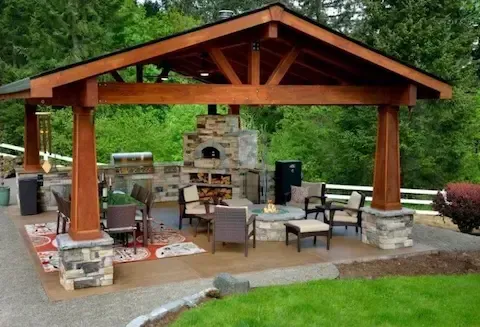
Coastal Outdoor Kitchens for Suffolk VA Waterfront Homes
Waterfront living in Suffolk, Virginia carries a particular kind of appeal — morning light off the Nansemond River, afternoon breezes cutting across the Chuckatuck Creek inlets, and evenings spent watching the sky change over open water. If you own one of these properties, you already understand why extending your living space outdoors makes sense. What you may not have fully considered is how dramatically the coastal environment affects what an outdoor kitchen needs to be, and how quickly the wrong materials will fail when exposed to salt air, humidity, and the kind of moisture that never fully dries in Hampton Roads summers.
Why Coastal Conditions Demand a Different Approach
Suffolk sits at the western edge of the Hampton Roads metro, where tidal tributaries and river systems push salt-laden air inland farther than many homeowners expect. Properties along the Nansemond River, Lake Cohoon, and the marshy shorelines near Driver experience corrosion rates that would surprise anyone accustomed to building in a landlocked region. Standard aluminum cabinet frames oxidize. Painted MDF swells and delaminates within a single season. Mild steel fasteners rust through before you've hosted a dozen dinner parties. Building a coastal outdoor kitchen means selecting every component with the explicit understanding that the environment is actively working against you.
This isn't a reason to avoid outdoor kitchens — it's a reason to build them correctly from the start. A well-specified coastal kitchen on a Suffolk waterfront property will outlast one built with standard materials by a decade or more, and it will do so while holding its appearance through the humidity spikes that arrive every June and the salt events that follow any significant storm track through the Chesapeake Bay region. For the full scope of what's possible with outdoor spaces on your property, explore our Outdoor Living Spaces services.
Material Selection: The Foundation of a Lasting Build
The single most important decision you'll make when planning a coastal outdoor kitchen is the material specification. Every other choice flows downstream from it.
For cabinetry, marine-grade polymer and stainless steel with a 304 or 316 alloy rating are the only two credible options for Suffolk waterfront locations. Marine-grade polymer doesn't absorb moisture, doesn't rust, and won't warp under the repeated wet-dry cycles that come with tidal proximity. It's UV-stabilized to handle the intense sun exposure that open waterfront sites receive, and it comes in finishes that hold up to pressure washing when saltwater residue accumulates after storms. For stainless, 316-grade is worth the premium over 304 at sites within close proximity to tidal water — the added molybdenum content significantly improves resistance to chloride pitting.
Countertops on waterfront kitchens face a combination of UV, moisture, and impact exposure that rules out many residential-grade options. Porcelain slab is currently one of the strongest performers in this environment. It's non-porous, highly UV-stable, and available in large-format slabs that reduce grout joints where moisture can penetrate. Concrete counters can work with the right sealer maintenance schedule, but they require annual attention in this climate. Granite performs well but varies significantly by stone type — tighter-grained varieties outperform more porous options in salt-heavy air.
Appliance selection at the waterfront level means specifying marine-grade or commercial-grade grills and refrigeration units with stainless interiors and exteriors. Brands that publish explicit coastal or marine ratings have tested their products against salt spray standards — this specification matters and should be part of any written proposal you receive from a contractor.
Structural and Roofing Considerations for Hampton Roads Storm Exposure
Suffolk waterfront properties fall within wind zones that require design attention regardless of how protected a given cove or inlet appears. Outdoor kitchen structures — whether fully open, pergola-covered, or enclosed under a permanent pavilion roof — need to be engineered for the wind loads applicable to the Hampton Roads coastal zone.
Solid roof structures offer the greatest protection for appliances and surfaces, keeping rain and salt spray off equipment even during sustained weather events. Standing seam metal roofing is a strong performer here — it handles wind uplift well, requires minimal maintenance, and doesn't absorb moisture the way some composite materials can. For open-frame pergola structures, the tradeoff is increased exposure, and appliance covers become more important as a result.
The structural frame beneath any roofed kitchen space should be either powder-coated steel with marine-grade primer, pressure-treated lumber rated for ground contact, or aluminum structural members. Untreated wood framing in a tidal environment will show significant deterioration within a few years, and replacing structural members later is far more costly than specifying correctly upfront.
Layout Planning for Waterfront Entertaining
Suffolk waterfront properties tend to orient toward the water, and your kitchen layout should acknowledge that fact rather than work against it. A kitchen positioned so that the cook faces the water — or at minimum, faces guests who are facing the water — creates a fundamentally different entertaining experience than one that puts the cook's back to the view. Linear layouts along a perimeter wall can work well when that wall runs parallel to the water. L-shaped configurations let you orient one cooking station toward the view while a secondary prep zone serves an interior-facing function.
Outdoor bars with barstool seating work particularly well on waterfront sites where guests want to watch water traffic, sunsets, or wildlife activity without committing to seated dining. This kind of flexible space — where people can drift between the kitchen bar, a lounge area, and the dock — reflects how waterfront entertaining actually unfolds in Suffolk neighborhoods like Harbour View, Sleepy Hole, and along the private waterfront parcels north of downtown.
If you're in the early stages of thinking through what an outdoor kitchen might look like alongside a broader landscape plan, our summer outdoor living write-up covers how outdoor kitchens fit within larger seasonal lifestyle goals for Hampton Roads homeowners.
Permitting and Site Conditions in Suffolk
Building a covered outdoor kitchen structure in Suffolk requires a building permit from the City of Suffolk Department of Planning and Community Development. The permit triggers a review process that includes zoning setback compliance, and for waterfront properties specifically, Chesapeake Bay Preservation Area regulations may apply depending on how close the structure falls to tidal shoreline or Resource Protection Area buffers. These aren't obstacles to be avoided — they're processes that protect both your investment and the shoreline environment that makes your property valuable.
Any contractor you work with on a waterfront outdoor kitchen build should be familiar with local permitting requirements and able to advise on what's needed before design finalizes. Work that goes in without permits creates title complications and potential issues with homeowner's insurance coverage if a claim ever involves the unpermitted structure.
Closing Perspective
A coastal outdoor kitchen built for Suffolk's waterfront conditions is a long-term investment in how you use your property. When it's specified correctly — salt-resistant cabinetry, marine-grade appliances, storm-rated roofing, and a layout that embraces the water rather than ignoring it — it becomes one of the most frequently used spaces on the property. The Hampton Roads climate, despite its challenges, offers a genuinely long outdoor cooking season that runs well into autumn. Getting the build right upfront means that season is something you enjoy rather than something you spend managing material failures.
