Retaining Walls Suffolk VA: Materials and Cost Guide
Your property's terrain challenges in Suffolk, Virginia often require structural solutions that combine functionality with aesthetic appeal. Retaining walls serve dual purposes: preventing soil erosion on slopes while creating usable outdoor spaces and defining landscape boundaries.
Understanding Suffolk's Terrain Challenges
Suffolk's diverse topography, from the Great Dismal Swamp's wetlands to rolling agricultural fields, presents unique challenges for property owners. The city's clay-heavy soils expand and contract with moisture changes, creating pressure against retaining structures. Areas near the Nansemond River experience additional challenges from periodic flooding and high water tables.
The region's average annual rainfall of 45 inches, concentrated heavily during summer months, makes proper drainage essential for any retaining wall project. Suffolk's USDA hardiness zone 8a means freeze-thaw cycles, while less severe than northern regions, still impact material selection and construction methods.
Slopes exceeding 30 degrees typically require engineered retaining solutions. Many Suffolk neighborhoods, particularly those developed on former farmland, feature natural grade changes that benefit from terracing with retaining walls to create level outdoor living spaces.
Material Options and Performance Characteristics
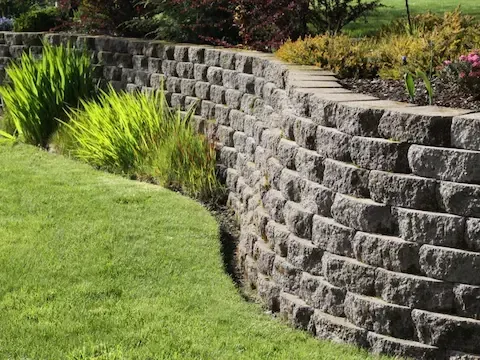
Segmental retaining wall blocks dominate Suffolk installations due to their versatility and performance in local soil conditions. These interlocking concrete units, available in numerous colors and textures, handle the region's clay soil movement better than rigid materials. Standard blocks cost $8-15 per square foot installed, with premium textured options reaching $18-25 per square foot.
Natural stone retaining walls complement Suffolk's traditional architectural styles but require careful selection for local conditions. Fieldstone and granite perform well in the humid climate, while limestone and sandstone may experience accelerated weathering. Natural stone installations range from $20-35 per square foot, depending on stone type and complexity.
Timber retaining walls using pressure-treated lumber offer cost-effective solutions for lower walls. However, Suffolk's humid subtropical climate and termite pressure limit timber wall lifespan to 15-20 years maximum. Expect costs of $12-20 per square foot for timber installations.
Poured concrete and concrete masonry unit (CMU) walls provide maximum strength for challenging sites but require professional engineering for walls exceeding four feet. These permanent solutions cost $25-40 per square foot but offer decades of performance when properly constructed with adequate drainage.
Specialty Materials for Suffolk Conditions
Geogrid reinforcement becomes critical for walls exceeding three feet in Suffolk's expansive clay soils. This synthetic material, layered within segmental block walls, distributes loads and prevents failure. Geogrid adds $3-5 per square foot but significantly improves wall performance.
Permeable materials like gabion cages filled with local stone offer excellent drainage properties essential in Suffolk's wet climate. While less common for residential applications, gabions work well for waterfront properties along the Nansemond River system.
Height Restrictions and Engineering Requirements
Suffolk's building codes, following Virginia Uniform Statewide Building Code guidelines, permit retaining walls up to four feet without engineering stamps for most residential applications. Walls exceeding this height require structural engineer involvement and building permits.
The city's setback requirements typically mandate retaining walls remain at least three feet from property lines, though specific zoning districts may have different requirements. Historic districts around downtown Suffolk may require additional architectural review for retaining wall projects visible from public rights-of-way.
Terraced wall systems allow greater total height retention while keeping individual wall segments within code limits. This approach works particularly well on Suffolk's gentle slopes, creating multiple planting terraces that enhance landscape design while managing grade changes effectively.
Professional engineering becomes mandatory for walls retaining water, supporting additional loads like driveways, or installed in areas with poor soil conditions. Suffolk's clay soils often trigger engineering requirements due to their expansive nature and seasonal movement patterns.
Drainage Considerations for Local Climate
Suffolk's clay soils drain poorly, making retaining wall drainage systems critical for long-term performance. Standard installations require granular backfill extending the wall's full height, typically using #57 stone or similar angular aggregate. This drainage stone costs $35-45 per ton delivered.
Perforated drain pipe at the wall's base connects to daylight drains or existing storm systems where possible. The city's storm water management requirements may dictate specific drainage connections, particularly for larger retaining wall projects that alter natural drainage patterns.
Surface drainage management prevents water from reaching the wall's backfill area. Crown drainage systems, swales, and proper grading direct runoff away from retaining structures. Retaining Walls require ongoing maintenance of these drainage features to prevent hydrostatic pressure buildup.
Geotextile fabric behind retaining walls prevents soil migration into drainage stone while allowing water passage. This fabric, costing $0.50-1.00 per square foot, extends wall life significantly by maintaining drainage system integrity.
Managing Suffolk's Seasonal Water Issues
The region's wet summers and periodic hurricane impacts require robust drainage systems. Installing drainage stone to grade level, rather than stopping at the standard two-thirds height, provides additional capacity during extreme weather events common to southeastern Virginia.
French drain connections to existing storm systems require Suffolk Public Utilities approval for connections to city infrastructure. Private drainage solutions like dry wells or rain gardens often provide better long-term performance while meeting environmental regulations.
Cost Factors and Budget Planning
Retaining wall costs in Suffolk vary significantly based on material selection, height, access conditions, and soil preparation requirements. Basic segmental block walls for gentle slopes start around $25 per square foot installed, including excavation and backfill.
Site preparation costs increase substantially for clay soil conditions common throughout Suffolk. Soil stabilization, additional excavation for proper base preparation, and enhanced drainage systems can add 30-50% to base installation costs.
Access challenges typical in established Suffolk neighborhoods drive costs higher. Limited equipment access requires smaller machinery and hand-work, increasing labor costs by $5-10 per square foot. Properties backing to wooded areas or wetlands often face these access premiums.
Permit costs for engineered retaining walls range from $200-500 depending on project scope. Engineering fees add $1,500-3,500 for residential projects, with costs scaling based on wall complexity and soil conditions.
Hidden Costs and Long-Term Considerations
Utility location and protection adds costs when retaining walls intersect existing infrastructure. Suffolk's older neighborhoods often have utilities that require relocation or protection during construction, adding $1,000-3,000 to project costs.
Landscape restoration following retaining wall installation should factor into budget planning. Disturbed areas require soil amendment, grading, and replanting, typically costing $3-8 per square foot for basic restoration.
Seasonal Installation Timing
Suffolk's construction season runs year-round, but optimal retaining wall installation timing considers weather patterns and soil conditions. Late fall through early spring provides the driest conditions for excavation and backfill operations in the region's clay soils.
Summer installations require careful moisture management as clay soils become sticky and difficult to compact properly when wet. Hurricane season from June through November can disrupt construction schedules and create challenging working conditions.
Spring installation allows immediate landscape establishment, taking advantage of the growing season for plants that will eventually complement the retaining wall structure. This timing works well when integrating retaining walls with broader landscape renovation projects.
Winter construction proceeds with fewer delays but requires attention to frost protection for concrete elements and proper soil temperature for optimal compaction. Suffolk's mild winters rarely create extended construction delays unlike northern regions.
Maintenance Requirements by Material Type
Segmental block retaining walls require minimal ongoing maintenance in Suffolk's climate. Annual inspection of drainage systems and joint sand replacement every 3-5 years maintains structural integrity. Power washing removes organic staining common in the humid environment.
Natural stone walls need periodic repointing of mortar joints and replacement of damaged stones. Suffolk's freeze-thaw cycles, while mild, gradually deteriorate mortar over 15-20 year cycles. Stone cleaning removes organic growth that thrives in the humid climate.
Timber retaining walls require annual inspection and treatment for insect damage. Suffolk's active termite population makes regular professional inspection essential for timber structures. Expect board replacement every 5-7 years as normal maintenance.
Drainage system maintenance applies to all retaining wall types. Annual cleaning of drain outlets and inspection of backfill settlement prevents hydrostatic pressure problems that cause wall failure.
Integration with Suffolk Landscape Design
Retaining walls should complement Suffolk's predominant architectural styles, from colonial revivals in established neighborhoods to contemporary designs in newer developments. Material selection and color coordination with existing hardscape elements creates cohesive outdoor environments.
Plant selection for areas above and below retaining walls must consider Suffolk's clay soils and drainage patterns. Native plants like Virginia sweetspire and coral honeysuckle thrive in these conditions while providing erosion control and visual interest.
Lighting integration enhances retaining wall functionality and safety. Low-voltage LED systems work well with most wall materials, creating attractive nighttime features while improving security around grade changes.
Consider how retaining walls interact with other outdoor living elements planned for your Suffolk property. our Suffolk outdoor living guide covers coordination strategies for patios, walkways, and planting areas that complement retaining wall installations.
Professional Selection and Project Management
Choosing qualified retaining wall contractors in Suffolk requires verification of proper licensing, insurance, and local experience. The Virginia Board for Contractors requires Class A licenses for projects exceeding $120,000, with smaller projects requiring Class B or C licensing depending on scope.
Local experience matters significantly given Suffolk's unique soil conditions and drainage challenges. Contractors familiar with city permitting processes and utility coordination can prevent delays and ensure code compliance throughout the project.
References from recent Suffolk projects provide insight into contractor performance and problem-solving capabilities. Well-established contractors maintain relationships with local engineers, suppliers, and permitting officials that benefit project efficiency.
Project timeline expectations should account for potential delays from weather, permit processing, and material delivery. Suffolk's growing construction market can create material shortages during peak building seasons, requiring flexible scheduling approaches.
